
Ultrasound improves fish welfare
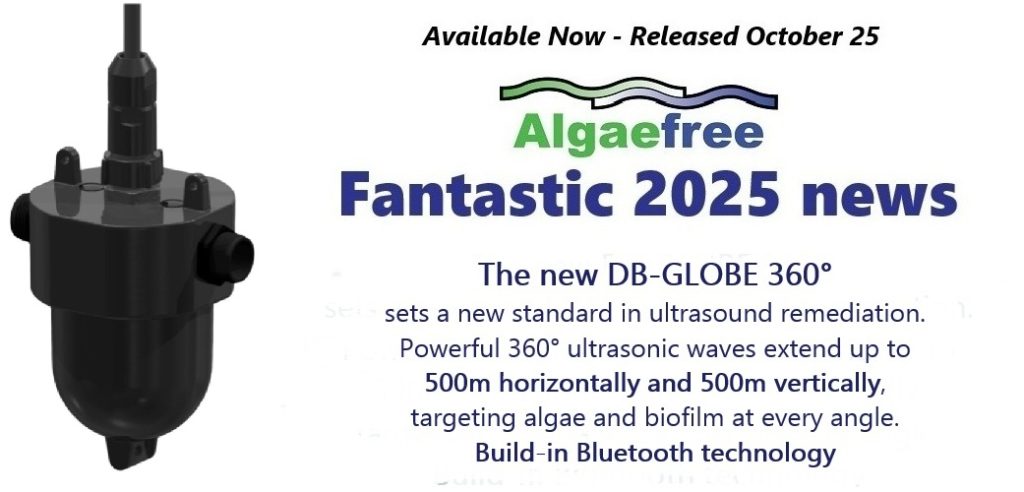
Ultrasound — When Fish Health and Mortality Matter!

How ultrasound improves fish welfare:
PARAMETER DOCUMENTED EFFECT OF ULTRASOUND APPLIVATION
Fish stress response: Reduced exposure to mechanical net cleaning results in lower acute and chronic stress levels.
Feed intake: Stable feed intake is maintained due to reduced disturbance in the cage environment.
Gill health: Reduced presence of particles and biofilm lowers the risk of gill irritation and inflammatory responses.
Gill function: Improved oxygen uptake resulting from cleaner gill surfaces.
Mortality: Improved gill health and reduced stress contribute to lower mortality rates.
Salmon lice: (Lepeophtheirus salmonis) Ultrasound can reduce lice infestation by up to 30%, likely through interference with free-swimming life stages. Operational load: A 60–70% reduction in net-cleaning requirements decreases fish handling and associated operational interventions.
Production stability: Combined effects result in improved fish welfare and increase biological robustness in production.
The economic benefits of ultrasound:
reduced maintenance and cost savings!

BREAKING NEWS 2026
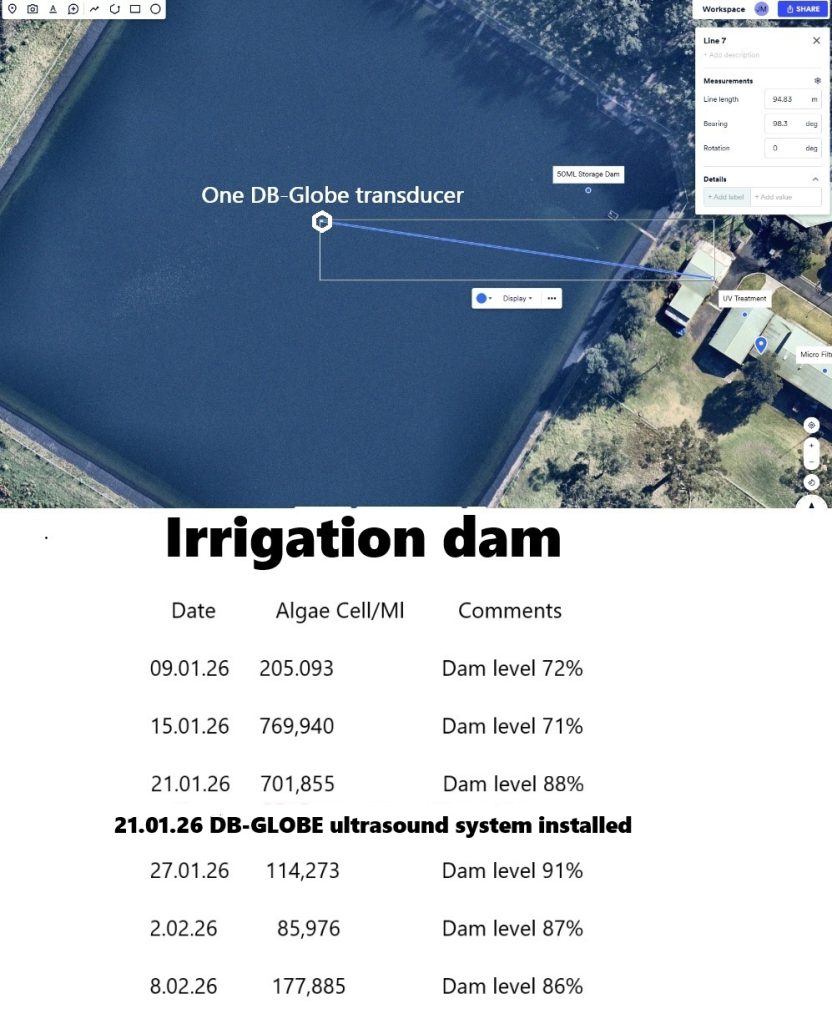
DB-Globe 2026 Delivers Outstanding Results in Algae Testing

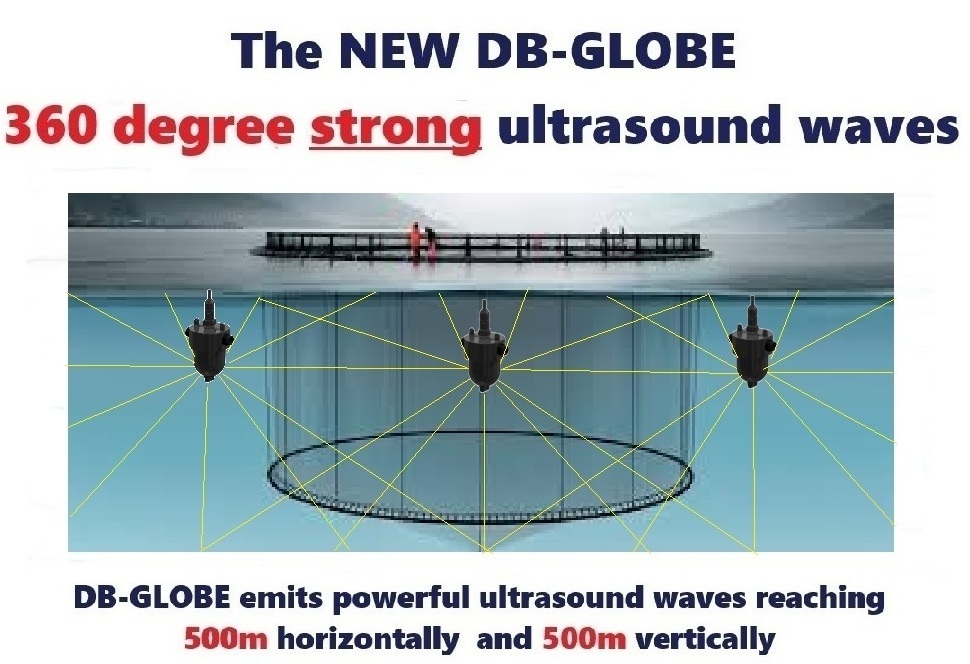
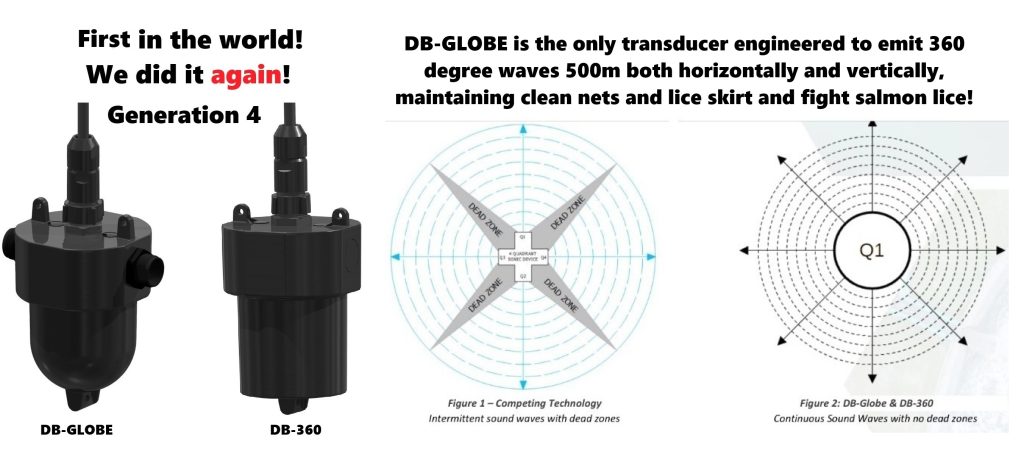
The new and exclusive DB-GLOBE 360° Gen 4 is more powerful, offers multiple frequencies,
controls algae and biofilm, disrupts salmon lice and dramatically reduces the need for net cleaning.
How Ultrasound Fights Salmon Lice
Ultrasound is used as a method to combat salmon lice in fish farming cages by disrupting the lice infestation early in its development.
The technology, which has been under development for ten years, can reduce lice infestation by up to 60 percent,
making it a preventive tool in the fight against the parasite.
The system consists of ultrasound units that are easily mounted in the cage.
Ultrasound Fights Salmon Lice
Preventive method: Ultrasound equipment is used as a preventive measure to stop the lice at an early stage of its life.
Interrupting the life cycle: The goal of the technology is to disrupt the salmon louse’s life cycle so that it cannot attach and reproduce.
Reduced infestation: Tests show that the technology can reduce the amount of salmon lice by around 60 percent.
Complementary method: Although ultrasound reduces lice infestation, it still serves as a supplement to other methods used in combating salmon lice.
Ultrasound for Lice Control

Ultrasound and Lice Detachment: Ultrasound waves can cause disruption in the attachment mechanism of salmon lice, making it harder for them to cling to the fish, leading to a decrease in lice population over time.
Ultrasound’s Impact on Lice Movement: The ultrasonic sound waves disorient salmon lice, disrupting their movement and feeding behavior, which can prevent them from effectively attaching to or infesting the fish.
Ultrasound as a Repellent: Salmon lice tend to avoid areas treated with ultrasound, as the sound waves interfere with their sensory systems, acting as a deterrent to their attachment and survival.
Ultrasound for Lice Control: By emitting high-frequency sound waves, ultrasound can damage the sensory organs of salmon lice, interfering with their ability to find and infest the fish, resulting in reduced lice numbers.
Ultrasound’s Effect on Lice Reproduction: The application of ultrasound waves can interfere with the reproduction and egg-laying process of salmon lice, limiting their ability to reproduce and helping to control the overall population.
Our fish farming customers around the world:


SunSonix SOLAR PANEL TECHNOLOGY
AND ALPHA 4-WAYS TEST IN AQUACULTURE IN SAUDI ARABIA
In January 2025, we successfully deployed the ALPHA 4-Ways alongside our SunSonic solar panel system for aquaculture testing in the Red Sea. Each unit is delivered fully pre-assembled with integrated batteries, ensuring seamless plug-and-play installation.
Our test includes 3 SunSonix solar panels and 6 Alpha 4-ways transducers.

The net is still, after 3 months, almost completely free of biofilm and algae growth.
The amount of biofilm colonization and algae buildup on the net has been reduced
and the number of net cleanings has been reduced by approximately 75%.
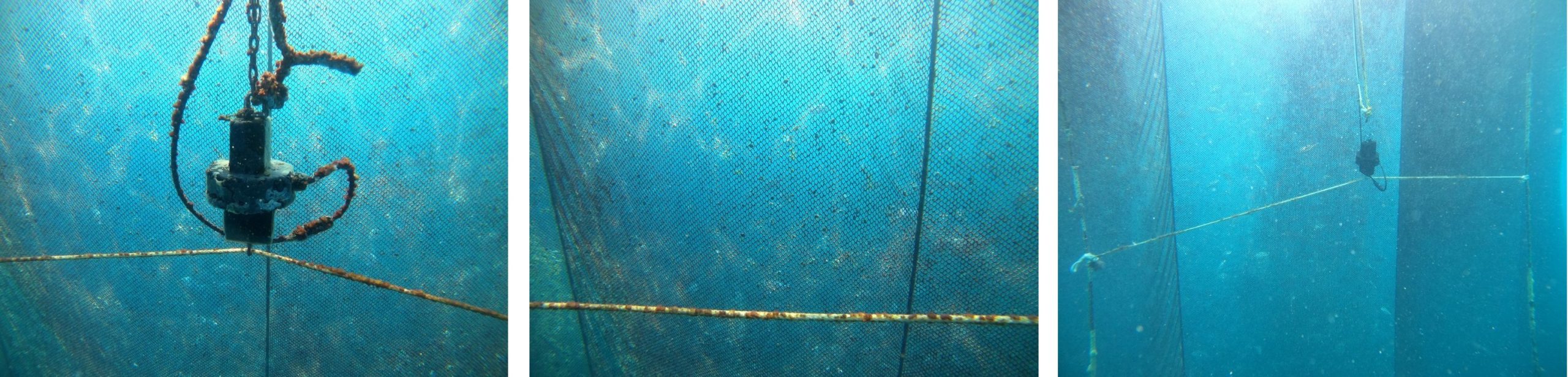
ALPHA ULTRASOUND TEST FOR HUON IN TASMANIA 2022
OUR SALMON FARM TEST IN TASMANIA
SHOWS THE DIFFERENCE WITH ALPHA AFTER 8 WEEKS
Our test results in Tasmania: 73% reduce of net cleaning.
ULTRASOUND controls algae, salmon lice, biofilm and bacteria!
Ultrasound replace expensive and harmful net hosting.
Algae problem in the fish gills and breathing problems were also solved.
Nothing can compete with ultrasound in fish farming when it comes to solving algae problems.


The control pen reached the net clean trigger score of ‘4’ at 41 days, while the trial net reached the trigger score at day 61 days
(day 59 was not counted as the base score of 4 was confirmed to only be a 3 when checked by net cleaning ROV staff)
The trial pen containing the AlgaeFree ultrasonic units was able to push out the net cleaning interval period to 61 days
compared to the control pen which only achieved 41 days
The net scores for the two pens is included below:


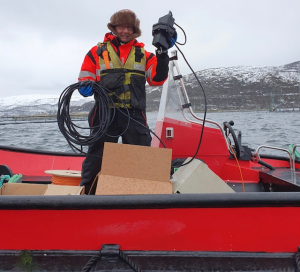
Test result – Salmar save half the cleaning time with ALPHA 4-ways
SalMar Norway tested Gen 1 from April 2019 to end of the year, 4 pcs ALPHA 4-ways transducers around the salmon fish net
and the result show that they reduce net cleaning by 48%. That means AUD $88,000 savings per cage per year.
Graph from SalMar Test 2019
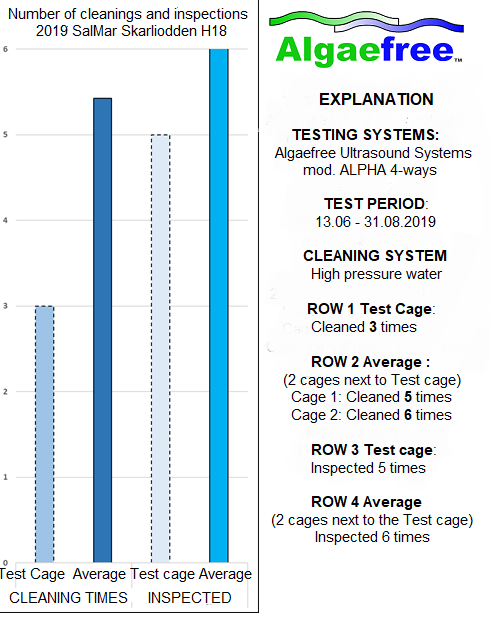
ALGAEFREE Alpha 4-ways at salmon hatcheries and smolt production
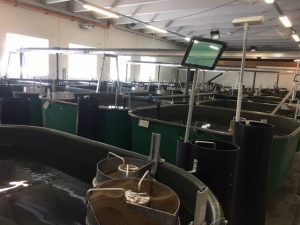
ALPHA 4-ways in a trickling finger sump in the Hatchery
HEALTHY SALMON SURVIVE AND GROW FASTER
SalMar at Finnsnes in Norway started testing 4 pcs ALPHA 4-ways ultrasound system in their juvenile fishery in 2020.
The result was clear, ultrasound is great for the fish welfare. They observe that after only a few weeks the jellies on the salmon were clean!
That’s why SalMar again in 2020 re-invested in this great system and purchased another 8 ALPHA 4-ways transducers.
The result was a 100% success for the customer and exceeded their expectations.
They observed that after only a few weeks…
That’s why SalMar in 2020 again invested and purchase 8 pcs ALPHA 4-ways transducers.
Murray Darling Fisheries – Wagga Wagga, NSW
ALPHA 2-ways Ultrasound units are used to reduce algae growth and cage fouling in fresh water grow-out ponds.
THIS IS THEIR TRIAL REPORT:
We’ve seen strong results from a recent trial using the small ALPHA 2-ways ultrasound from ALGAEFREE
to reduce algae growth and cage fouling in a fresh water grow-out pond located in the Riverina, Australia.
During the previous season these cages needed cleaning every 2-3 days to maintain water flow and oxygen
levels in the cages. After cleaning each cage the fish would stop feeding for a full day afterwards. This continual
cleaning was contributing to increased labor costs and reduced fish growth.
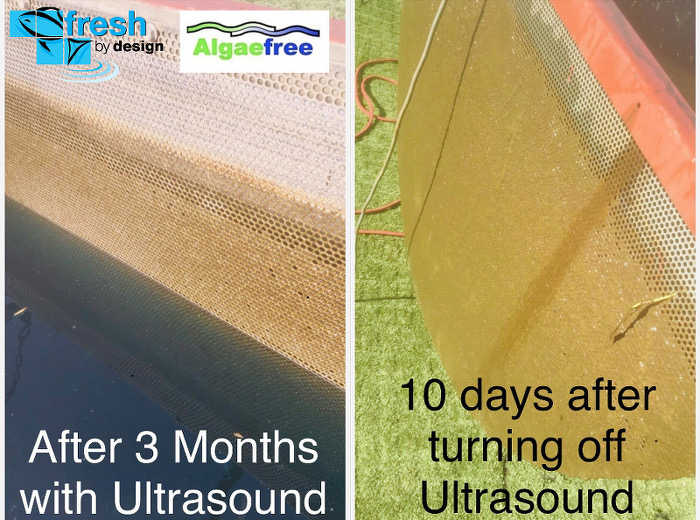
This season an ALGAEFREE Ultrasound unit was installed in the pond. The cages remained clean for 3 months and were
not cleaned once. The clean cages resulted in reduced labor and increased fish growth with a shorter grow out time.
To validate the performance of the ALGAEFREE ALPHA 2-ways Ultrasound the unit was switched off after running for
3 months. 10 days later the cages were completely blocked due to fouling and cleaning was required.
One Single ALPHA 2-Ways Ultrasound unit was used for the trial.




ROCKY POINT Woongoolba, QLD AUSTRALIA
is breeding beautiful Cobia fish and they had lots of algae problems in their fresh water pond.

Peter from Rocky Point Aquaculture inspects the ALGAEFREE ALPHA ULTRASOUND Unit

They installed ALPHA 2-ways in 2019 and their Processing Manager Peter Cummings told us that the
result was amazing! That’s why they invested ALPHA 2-ways again in 2020 on different sides of their pond!

The net before ALPHA ultrasound system

BEFORE ALPHA INSTALLATION: Fish net was full of mussel growth

AFTER ALPHA INSTALLATION: There is almost no mussels on the net

Trinity Bay Barramundi – Cairns, QLD
Saltwater Cages

Clean cage after 4 weeks with ALPHA 1 week after ultrasound turned off

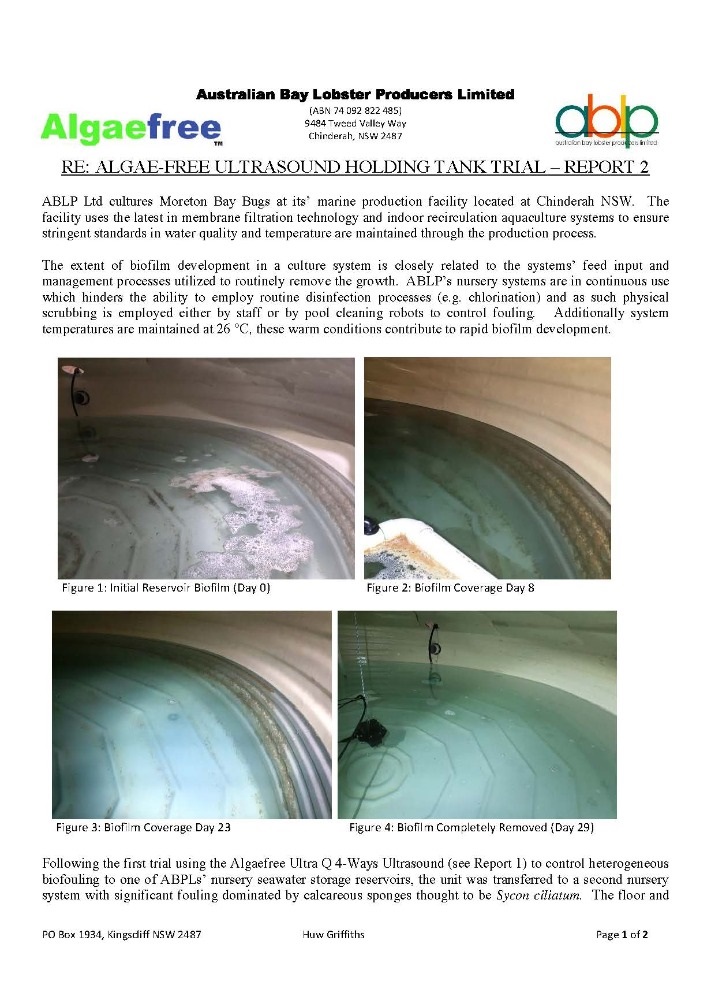
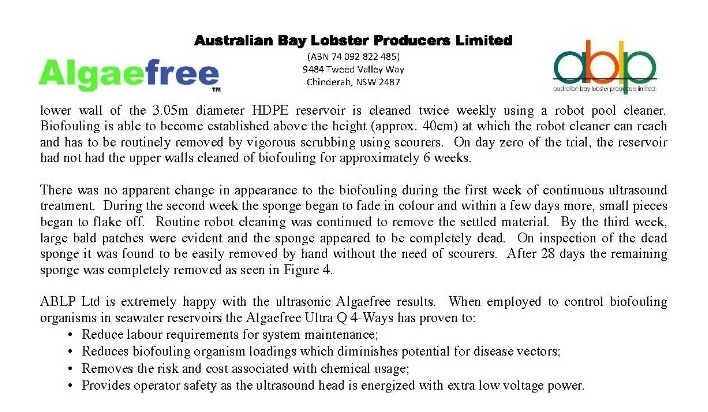
Australian Bay Lobster Producers Ltd
Tweed Vally Way, Chinderah NSW AUSTRALIA




SALMON FARMING
ALGAEFREE SYSTEM IN SALMON FARMING CAGE

ALGAEFREE was a natural part of a critical element in the construction,
when Salmar build the world’s largest seabed in China.

Odde Rolfsen supervising the Norwegian Ocean Farming salmon cage which was built in China in 2016.
25 ALGAEFREE transducers where installed in the construction.
Our first and great net test in Norway 2008

BENEFITS IN FISH FARMING IS NOT ONLY FOR THE FISH WELFARE
1 It is a one time investment!
2 It kills algae growth that is already stuck on the net!
3 Prevents new algae growth!
4 Achieve massive cost savings to your maintenance budget yearly
5 ALPHA SYSTEMS are useful wherever there is fouling problems!
6 Tested for over 6 years with amazing results!
7 Electronics work year after year!
8 Cheapest way of antifouling- ever!
9 Easy to install!
10 No maintenance!
11 The system is flexible!
12 All ALGAEFREE SYSTEMS are 100% environmentally and fish friendly!
13 Heavy Duty transducer
Effects of ultrasonic algal control devices on fish
As of June 16, 2022, through the published (Taylor & Francis) report by Cornell University, HBS Ultrasonic technology is the only
peer reviewed, American made, ultrasonic algae remediation product on the market. This report proves both in field and lab
tests that our technology does not detrimentally affect fish.AbstractGetchell RG, George E, Rice AN, Malatos JM, Chambers BM,
Griefen A, Nieder C, Rudstam LG. 2022. Effects of ultrasonic control devises on fish. Lake Reserv Manage. 38:240–255.
Harmful algal blooms (HABs) can have serious impacts on both ecosystem services and human health, and several mitigation
techniques have been developed to control them. Ultrasonic sound sources can disrupt developing algal mats, causing
concern that the acoustic energy emitted from these devices may have deleterious health or behavioral effects on nearby fishes.
We conducted field and laboratory studies on the effects of ultrasonic control devices on resident fishes. Field observations in
Oneida Lake, New York, of the behavioral response of fish to the ultrasonic sound were conducted in shallow water using
line transects, and in deeper water using hydro acoustics. No avoidance behavior was detected in either shallow or deep
water while the ultrasonic devices were operating. Under controlled laboratory conditions, 7 recreationally or ecologically
important fish species and local wild tadpoles were exposed to sound produced by the ultrasonic control devices for a 2 week period.
No behavioral effects were noted while fish and tadpoles were monitored during the exposure interval. Finally, no significant
or harmful histological or morphological alterations to the skin, fins, gills, or internal organs were observed on either fish
or tadpoles when specimens were examined after the 2 week exposure period.
ULTRASOUND PUBLICATIONS
https://www.researchgate.net/publication/279499297_The_effectiveness_of_chemical-free_water_treatment_system_combining_fibre_filters_ultrasound_and_UV_for_fish_farming_on_algal_control
ULTRASOUND KILLS SALMON LICE
https://patents.google.com/patent/WO2017044985A2/en
Algae Toxins in Pond Aquaculture
https://thefishsite.com/articles/algal-toxins-in-pond-aquaculture
As of June 16, 2022, through the published (Taylor & Francis) report by Cornell University,
HBS Ultrasonic technology, is the only peer reviewed, American made, ultrasonic algae remediation
product on the market. This report proves both in field and lab tests that our technology does not detrimentally affect fish.
Abstract
Getchell RG, George E, Rice AN, Malatos JM, Chambers BM, Griefen A, Nieder C, Rudstam LG.
2022. Effects of ultrasonic control devises on fish. Lake Reserv Manage. 38:240–255.
Harmful algal blooms (HABs) can have serious impacts on both ecosystem services and human health, and several
mitigation techniques have been developed to control them. Ultrasonic sound sources can disrupt developing algal mats, causing concern
that the acoustic energy emitted from these devices may have deleterious health or behavioral effects on nearby fishes. We conducted
field and laboratory studies on the effects of ultrasonic control devices on resident fishes. Field observations in Oneida Lake, New York,
of the behavioral response of fish to the ultrasonic sound were conducted in shallow water using line transects, and in deeper water
using hydroacoustics. No avoidance behavior was detected in either shallow or deep water while the ultrasonic devices were operating.
Under controlled laboratory conditions, 7 recreationally or ecologically important fish species and local wild tadpoles wereexposed to
sound produced by the ultrasonic control devices for a 2 week period. No behavioral effects were noted while fish and tadpoles were
monitored during the exposure interval. Finally, no significant or harmful histological or morphological alterations to the skin, fins, gills,
or internal organs were observed on either fish or tadpoles when specimens were examined after the 2 week exposure period.
This illustrates where HBS technology works in frequency range and amplitude compared to other common
ultrasonic applications as well as maximum volume levels of dolphins and whales.