
Ultrasonic Algae Control for irrigation Dams
24–60 Month Rent-to-Own
Cut Chemical & Maintenance Costs!
 SEE ALSO VEOLIA’S OUTSTANDING TEST RESULTS:
Veolia Ref Algae Ultrasound Trial – 98% algae cell reduction

A FARMER’S IRRIGATION DAM SUCCESS STORY — GATTON, QLD, 2022
GENUINE PHOTOS — All images shown were taken at the farmer’s dam.
BEFORE TREATMENT | AFTER 6 WEEKS.
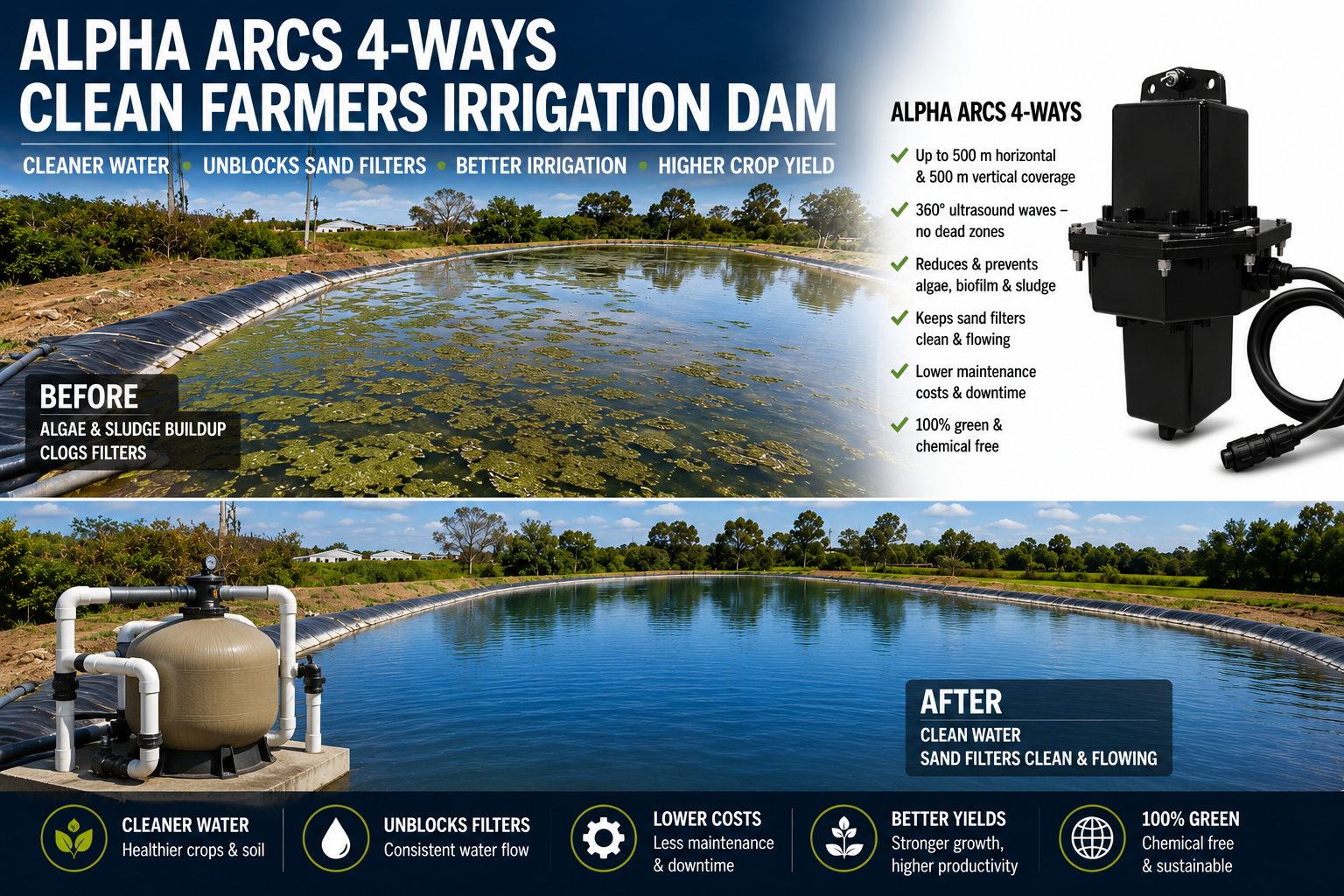
SEE GENUINE PHOTOS FROM A FARMER’S DAM IN GATTON, QLD
SEVERE WEED & ALGAE GROWTH IN AN IRRIGATION DAM


Excessive algae and weed growth made the farmer’s dam water unsuitable for irrigation,
repeatedly blocking the sand filter and disrupting the water supply.
REMARKABLE RESULTS — JUST 6 WEEKS LATER!


CLEAR WATER — FREE FROM WEEDS AND ALGAE!
The water became clear and weed-free in just six weeks and has stayed clear
for more than two years, with no signs of weed regrowth.
Impressed by the results, the same farmer in Gatton, QLD, ordered another identical system
in 2024 for a second irrigation dam experiencing the same problems.
VEOLIA 100m x 100m IRRIGATION DAM
93% PROVEN RESULTS — SEE THE DIFFERENCE IN PICTURES
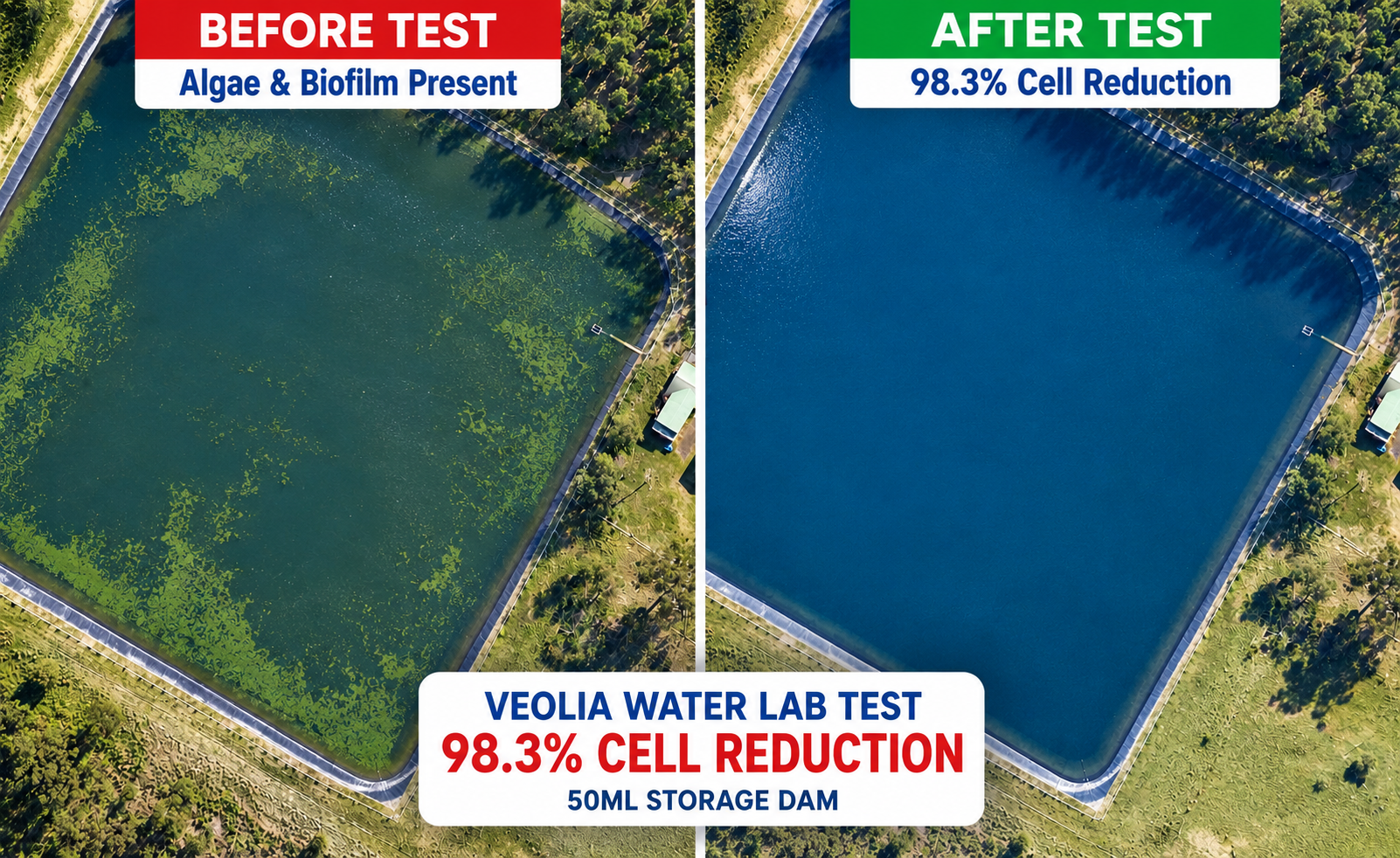
SEE ALSO VEOLIA’S OUTSTANDING TEST RESULTS:
Veolia Ref Algae Ultrasound Trial – 98% algae cell reduction
VERTICAL LETTUCE FARMING
Our vertical farming customers agree — the DB-GLOBE ultrasound system
is an effective solution for controlling algae, biofilm and bacteria.

CAN ULTRASOUND (24–205 kHz) HELP CONTROL STEC IN VERTICAL FARMING?
Ultrasound has potential as one part of a broader food-safety strategy. Research has demonstrated reductions in E. coli O157, a type of Shiga toxin-producing E. coli (STEC), under controlled treatment conditions, including ultrasound combined with sanitizers. These findings do not establish that every system operating within 24–205 kHz will achieve the same results.
HOW CAN ULTRASOUND AFFECT BACTERIA?
At sufficient acoustic intensity, ultrasound can generate cavitation—the formation and collapse of tiny bubbles in water. The resulting mechanical forces and chemical reactions can damage bacterial cells. The effect depends on the treatment conditions, including acoustic intensity, exposure time and temperature.
POTENTIAL APPLICATIONS
Controlled ultrasonic treatment may support:
Produce washing: Certain studies have demonstrated improved bacterial reductions when ultrasound is combined with sanitizers.
Equipment cleaning: Ultrasonic treatment combined with a sanitizer has reduced E. coli O157 contamination on lettuce-processing tools.
Water-treatment development: Any proposed system requires testing to establish its effectiveness against the target pathogens under actual operating conditions.
IMPORTANT LIMITATIONS
Bacterial reduction does not mean complete elimination. Research on ultrasonic produce washing has found reductions in pathogens without consistently eliminating them.
Frequency ranges alone should therefore not be presented as treatment recommendations. Direct treatment of lettuce also requires assessment of both microbial reduction and crop quality.
WHAT DOES THIS MEAN FOR DB-GLOBE?
To establish whether DB-GLOBE can help control STEC in a vertical farming system, independent testing should measure its performance under the intended operating conditions. Testing should address the relevant water, equipment or crop application.
Ultrasound may complement a validated food-safety programmed, but a claim that DB-GLOBE controls STEC requires evidence specific to the system and application.

ALPHA SYSTEM — LABORATORY TESTING
AQUARIUS TECHNOLOGIES tested the ALPHA ultrasound system in a laboratory at a water treatment plant, with excellent results!

Heavy algae and aquatic plant growth in the water channels beneath hydroponically grown crops.

Pictures taken December 2021 – results 3 weeks after installation.

Photos: ALPHA 2-Ways installed on 15 November 2021
The system was installed in a hydroponic herb-growing trial at the Aquarius Technologies laboratory to help prevent filter clogging.
Irrigation water can contain high levels of nutrients. While these nutrients support plant growth, they can also encourage excessive algae growth.
Algae in irrigation reservoirs can clog filters and irrigation lines and may be carried into growing areas. Waterborne plant pathogens, including certain fungi, can also damage crops.
BIOFILM BLOCKAGE INSIDE T-TAPE IRRIGATION LINES

HELP PREVENT ALGAE AND BIOFILM BLOCKAGES IN IRRIGATION SYSTEMS
Algae and biofilm from irrigation dams can clog drip lines, T-tape tubing and irrigation drippers, restricting water flow to vegetable crops.
The ALPHA 4-Ways ultrasound system offers a chemical-free approach to managing algae and biofilm in irrigation reservoirs, helping reduce the material entering filters and irrigation lines.
Cleaner irrigation water helps maintain reliable water flow to your crops.